Post Production
& Technology Details
Embracing new technology, the
movie was filmed in HD, at 1080P/24 resolution, using the Sony
HDW-F900 camera, the same camera George Lucas brought to the
forefront with the last Star Wars film.
The production company had
hired editor Schy Gleason before filming began. One week after
the shoot was “in the can”, post-production kicked into gear.
“It was a hectic editing schedule,”
stated Eisner, “and it was compounded by the fact that I had
returned to my fulltime position as a consulting physician with
Chiron Corporation.”
Gleason, a transplanted editor
from Los Angeles, had been primarily working on short projects
(many for Microsoft) in the Seattle area and Muffin Man
would be his first feature length film. Stepping into
the role of post-production supervisor was a big leap.
“I was very excited about the
opportunity of working in the High Def world,” stated Gleason.
“There is a real difference working in HD at 23.97fps; it’s
not video. There are visible and psychological differences for
the viewer.”
Pickle Tub Productions partnered
with the Seattle branch of Key Code Media to finish the film.
An Avid DS/HD Edit System was used and more than 2.3 terabytes
of hard drive space was required. Gleason had his hands full
familiarizing himself with the footage and managing memory while
Eisner added the editorial assistant duties of coordinating
the incorporation of documentary and dramatic footage to her
producer and director responsibilities.
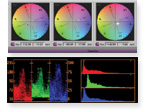
Once the basic edit was in place Gleason
also had the task of compositing and creating a few final “in
box” special effects and animations.
“It was great that our system
could handle the work of what might normally require 4 or 5
systems,” stated Gleason. “Because the DS could handle
all of our graphic needs, we could do it more efficiently and
all in just one box”
The limited budget and new technology
made many demands on the post-production team. Emmy award-winning
Sound Editor, Scot Charles, was in charge of sound design.
“We were working on the bleeding
edge of technology,” said Charles.
Several of the problems encountered
(particularly with software) had never even been seen before.
Solutions often involved an international network of web-based
editing “help-sites” as well as lots of trial and error.
“Despite her lack of extensive
editing experience, Jessica had a clear vision of what she wanted,”
said Gleason “and because of her professional background she
was very willing to learn, make decisions, and move on despite
the demanding schedule.”
The surround sound mix was
done on ProTools A/V and used Windows Media 9 Series for approval
and composer previews.

Despite the obstacles, the
production was completed in a rapid time frame and reasonably
close to its allotted budget.
“The production value of this
film is remarkable,” concluded Gleason. “By being efficient
they probably doubled the value of the production at the very
least.”
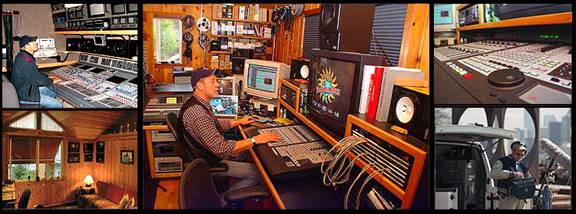
Scot Charles mixes the sound for the film
in his studio
|